

By Chris Mogbogu
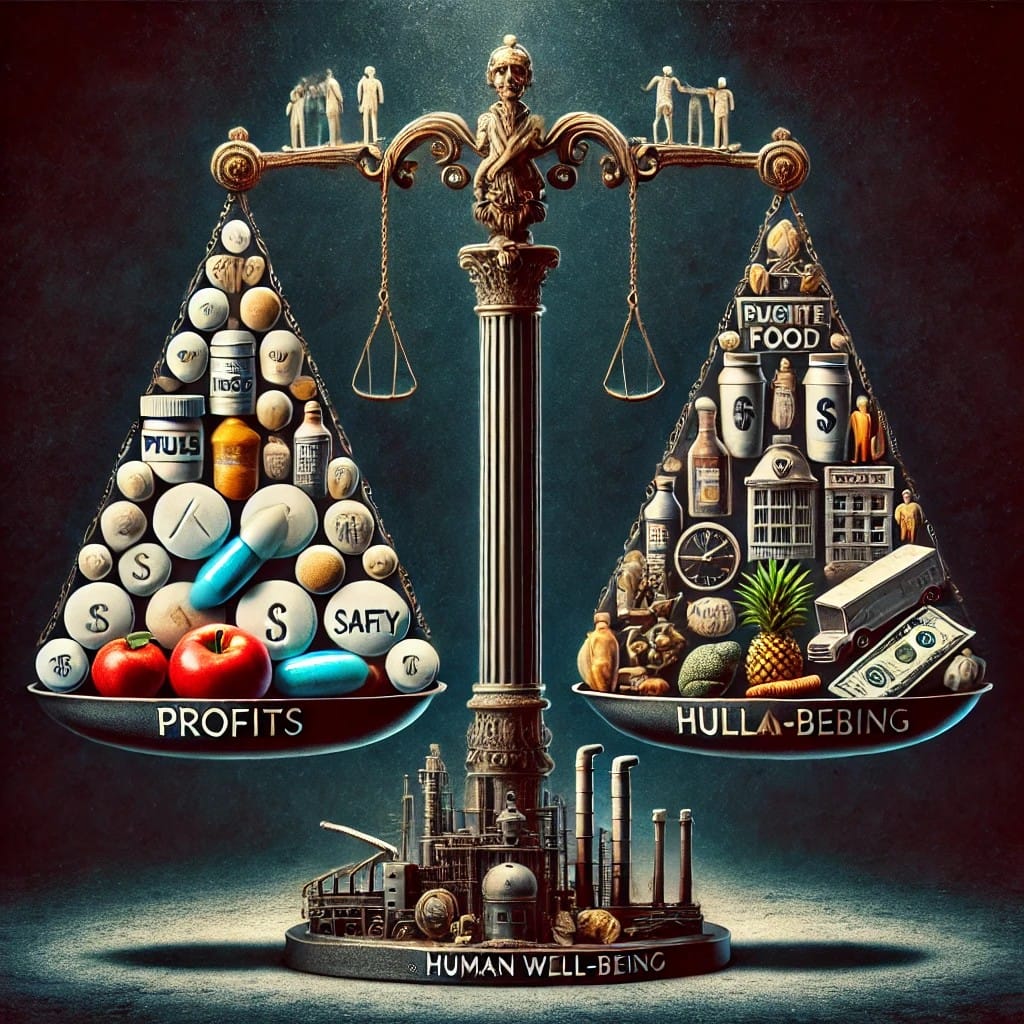
In a world driven by financial gains, profits have become the focal point for most businesses. But as the relentless pursuit of profit continues to grow, so does the insidious cancer that this obsession has birthed. This malady, driven by unchecked corporate greed, is evident across numerous industries, with some of the most detrimental effects found in sectors such as healthcare, food, and manufacturing. The pursuit of wealth, at any cost, is no longer just a business strategy but a menace that threatens the health, safety, and well-being of consumers globally.
The Healthcare Paradox
Few sectors illustrate the danger of profit-driven motives as clearly as the medical industry. For example, in many parts of the world, certain chronic conditions like diabetes or hypertension are “managed” rather than cured. The availability of expensive, long-term medications that offer symptomatic relief without addressing the underlying cause is a glaring sign of an industry capitalizing on sustained dependency. Pharmaceutical companies, driven by the need to maximize profits, often focus more on treatments that offer continuous cash flow rather than outright cures.
Take, for instance, the example of insulin. In the U.S., the price of this life-saving drug has skyrocketed over the years, despite being a century-old discovery. This has led to outrage and accusations that pharmaceutical companies are putting profit before patient lives. Some have even argued that conditions like Type 2 diabetes, which could be mitigated or even reversed through diet and lifestyle interventions, are instead treated with expensive drugs to secure long-term revenue.
Cutting Corners for Profits
Other industries, such as food and manufacturing, are equally guilty of prioritizing profits over consumer well-being. The food industry is rife with examples of companies cutting corners, using cheaper but harmful ingredients to enhance flavors, extend shelf life, or reduce production costs. Take processed foods loaded with high-fructose corn syrup, trans fats, and excessive amounts of sodium, all known to contribute to the global rise in lifestyle diseases. Yet, these products dominate the market because they are inexpensive to produce and generate significant returns.
In the automobile industry, safety scandals have also rocked major corporations, where some manufacturers chose to ignore critical safety issues because addressing them would cost too much. The 2015 Volkswagen emissions scandal is a notable example. In this case, the company intentionally deceived regulators to cut costs, resulting in severe environmental and public health repercussions.
Profit Over People
The most disturbing aspect of this profit-centric approach is the disregard for human lives. In many cases, consumers become mere statistics in the profit-making machine. Whether it’s the medical sector prioritizing prolonged treatments over cures or industries that put consumers at risk by compromising on quality, the overarching theme is clear: profits, even if it’s at the cost of people’s well-being.
The environmental degradation seen across the globe is another unfortunate byproduct of unchecked profit motives. From deforestation to oil spills, many corporations engage in environmentally destructive practices to save costs, ignoring the long-term implications for both the planet and human populations.
The Moral Responsibility of Businesses
The question then arises: Do businesses have a moral responsibility to society, or are they justified in their pursuit of profit, as long as it is legal? Ethical business practices should go beyond legality, focusing on the welfare of consumers, employees, and the environment. Corporate social responsibility (CSR) initiatives are a start, but they are often just that — a start — and not always reflective of real change. Companies must evolve from this profit-centric model to one that values long-term sustainability, consumer health, and societal benefit.
Towards a Sustainable Future
It is possible to run profitable businesses without succumbing to the temptations of exploiting consumer trust, manipulating the market, or cutting corners in ways that endanger lives. Conscious capitalism is a movement advocating for ethical practices in business while still focusing on growth and profit. It promotes transparency, fairness, and sustainability. By aligning business goals with the greater good, companies can create an environment where profits and ethics coexist.
In conclusion, the profit-first mentality has, in many ways, become a cancer that eats away at the foundation of trust between businesses and society. To reverse this trend, there needs to be a shift in business priorities, from short-term financial gains to long-term value creation that benefits everyone involved — from shareholders to consumers and the environment. Only then can we hope to foster industries that thrive not just on financial growth, but on human flourishing.