

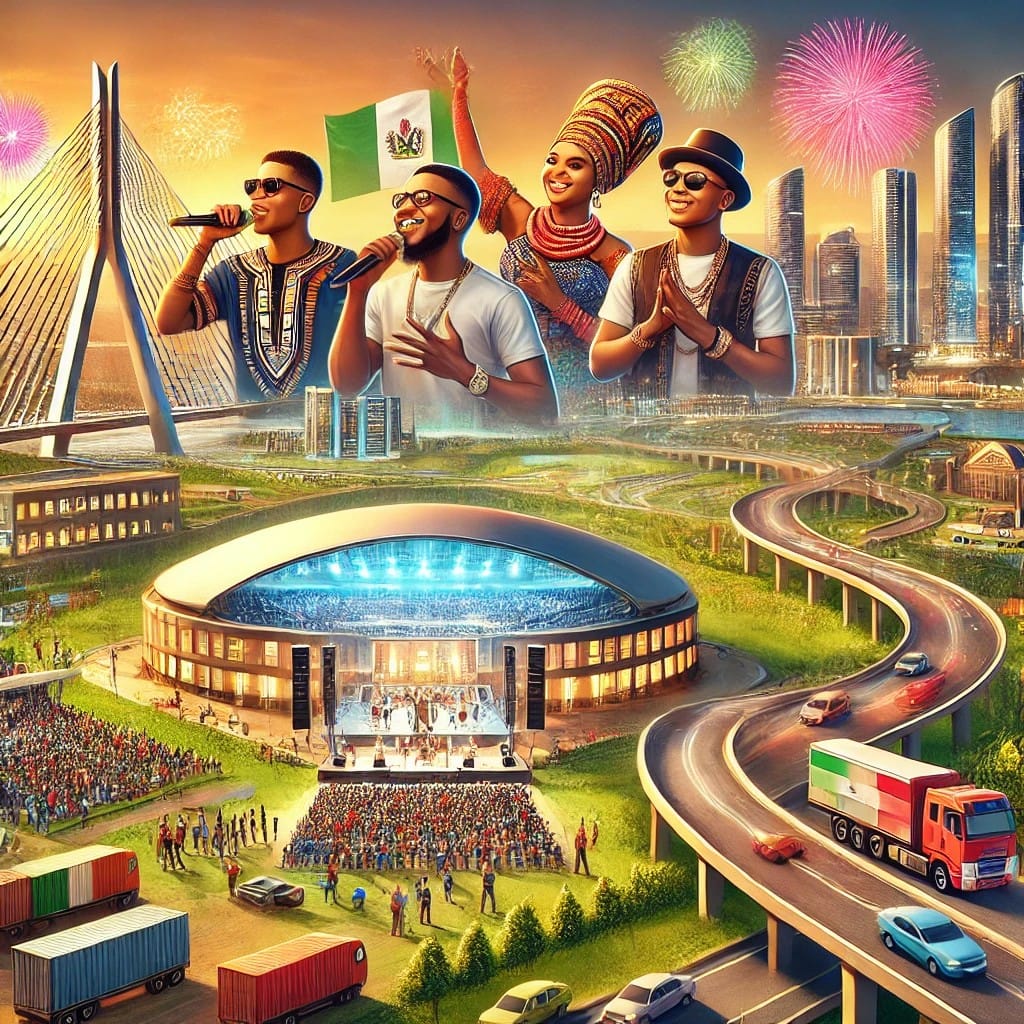
Nigeria is a powerhouse of creativity, especially in the realm of entertainment. From globally celebrated musicians like Burna Boy, Davido, Wande Coal, Wizkid, Ayra Starr, Tuface, Kaycee, Olamide, Moses Bliss, Asake to actors and filmmakers garnering international accolades, Nigeria’s entertainment industry is undeniably on the rise. These celebrities have captivated millions around the world, transcending borders and showcasing the richness of Nigerian culture. Their influence and reach can be harnessed to drive economic growth, but two major impediments—Nigeria’s insecurity and poor infrastructure—continue to stifle the full realization of this potential.
The Power of Entertainment Tourism
Entertainment tourism has proven to be a significant contributor to the economy of countries that have embraced it. International fans travel across continents to experience live performances, film festivals, and cultural events, injecting foreign exchange into local economies. Think of the economic impact of events like Coachella in the United States, Glastonbury in the UK, or Tomorrowland in Belgium. Nigeria, with its rich pool of musical and cinematic talent, is well-positioned to create similar flagship events that could attract global audiences. However, this potential is yet to be fully realized due to internal challenges.
Nigeria’s vibrant music scene is recognized worldwide, with afrobeats taking center stage. Major artists have packed out arenas and concert halls across Europe, North America, and beyond. Yet, the opportunity to bring that same energy and international following back home is hindered by the country’s persistent insecurity and infrastructural deficits. If these issues are addressed, Nigeria could become a premier destination for entertainment tourism, where international visitors can enjoy not only the music and cultural heritage but also the beauty of the country itself.
Insecurity: A Major Deterrent
Insecurity remains one of the most significant obstacles to Nigeria’s aspirations of becoming an entertainment tourism hub. Safety concerns, including kidnapping, banditry, terrorism, and general crime, have created an environment of fear and uncertainty. International tourists and investors, naturally risk-averse, are reluctant to visit or invest in a country where their safety cannot be guaranteed. This perceived risk diminishes the confidence of event organizers, international artists, and their fans, making it difficult for Nigeria to host world-class events.
For example, imagine an international music festival featuring the biggest names in afrobeats taking place in Lagos or Abuja. Such an event could draw thousands of visitors, generating substantial revenue for local businesses—from hotels and restaurants to transport and logistics providers. However, in the face of insecurity, these prospects remain dim. Nigeria’s safety issues also limit the freedom of movement for local celebrities, reducing their ability to connect with fans across the country and globally without fear.
Tackling insecurity requires more than just increased law enforcement presence; it demands a comprehensive approach. Strengthening law enforcement is essential, but so is enhancing intelligence gathering, improving community policing, and implementing proactive measures to prevent crime. Additionally, addressing the root causes of insecurity—such as poverty, unemployment, and inequality—will help create a safer environment for both locals and visitors.
Poor Infrastructure: A Critical Barrier
Beyond security, poor infrastructure is another critical barrier to unlocking the economic potential of Nigeria’s entertainment industry. Infrastructure is the backbone of any successful large-scale event. Yet, Nigeria struggles with inadequate transportation networks, unreliable power supply, and a lack of modern event facilities. The absence of world-class venues, hotels, and supporting infrastructure makes it challenging to host large-scale concerts, festivals, and international events.
For instance, artists performing at international events are accustomed to top-tier facilities, from state-of-the-art stages to high-tech lighting and sound systems. The lack of such infrastructure in Nigeria forces event organizers to settle for substandard options or to spend exorbitantly to bring in equipment and expertise from abroad. This not only increases the cost of organizing events but also diminishes the overall experience for performers and audiences alike.
Reliable transportation is also crucial for the success of entertainment tourism. Nigeria’s roads are notoriously poor, and the rail network is underdeveloped. For tourists to travel comfortably between cities or from airports to venues, these issues need to be addressed. Similarly, consistent power supply is critical to ensure that events can run smoothly without disruptions.
The government must invest in developing modern event facilities, upgrading transportation networks, and ensuring a reliable power supply. This will create an environment where large-scale events can thrive, attracting international talent and tourists.
Unlocking Nigeria’s Economic Potential
Nigeria’s entertainment industry holds tremendous economic potential, and addressing the twin challenges of insecurity and poor infrastructure is key to unlocking it. By investing in security, infrastructure, and partnerships, Nigeria can harness the global appeal of its celebrities to drive economic growth, boost foreign exchange earnings, and elevate the country’s international profile.
*1. Improve Security:* Strengthening security in Nigeria is not just about increasing police presence. It requires a multifaceted approach, including better training for law enforcement, enhanced intelligence capabilities, and proactive crime prevention strategies. Addressing the socio-economic conditions that breed insecurity is also crucial to creating a safe environment for both Nigerians and foreign visitors.
*2. Invest in Infrastructure:* Developing modern event facilities, upgrading transportation networks, and ensuring a reliable power supply are vital to the growth of Nigeria’s entertainment tourism sector. Public-private partnerships can play a significant role in financing these projects, and the government must create an enabling environment for such collaborations.
*3. Promote Nigeria’s Brand:* Nigeria must actively promote its brand as a destination for entertainment tourism. The country’s rich culture, vibrant music scene, and warm hospitality are assets that can be leveraged to attract international tourists and investors. Strategic marketing campaigns, participation in global tourism and entertainment fairs, and positive media coverage can help rebrand Nigeria as a premier destination.
*4. Collaborate with Stakeholders:* The government, event organizers, artists, and private sector investors must work together to create a conducive environment for entertainment tourism. This collaboration can include everything from streamlining event permits and reducing bureaucratic hurdles to fostering investment in infrastructure and security.
Proposal: Developing a World-Class Entertainment City in Nigeria
Nigeria’s entertainment industry, particularly its music scene, has achieved remarkable international success. With artists like Burna Boy, Wizkid, and Asake breaking global boundaries, the country is solidifying its place as a cultural powerhouse. However, to fully harness the economic potential of this thriving sector, Nigeria must invest in world-class infrastructure that supports entertainment tourism. The development of a purpose-built Entertainment City can serve as a catalyst for this growth.
This city would house state-of-the-art arenas, five-star hotels, recreational facilities, and other essential amenities to attract both local and international tourists. This proposal outlines the key components, benefits, and implementation strategy for building such an entertainment hub.
Vision
The vision is to create a premier destination for entertainment, leisure, and tourism in Africa. The Entertainment City will be a self-sustaining urban area that combines Nigeria’s rich cultural heritage with world-class infrastructure. This will position Nigeria as a global entertainment hub, drawing international artists, tourists, and investors, and driving economic growth.
Key Components of the Entertainment City
1. *World-Class Arena*
– A multi-purpose arena with a seating capacity of 30,000-50,000, capable of hosting international concerts, festivals, sports events, and conferences. The arena should be equipped with cutting-edge sound, lighting, and video technology to meet the demands of high-profile events.
– Designed with flexibility in mind, the arena can accommodate different types of events, from live music concerts to sporting competitions and cultural festivals.
2. *Five-Star Hotels*
– The city will feature luxury accommodations, including several five-star hotels to cater to international and local tourists, artists, and business travelers. The hotels will be strategically located near the arena and other key attractions, offering convenience and world-class service.
– These hotels will include amenities such as fine dining restaurants, rooftop lounges, spas, fitness centers, and conference facilities to meet the needs of a diverse clientele.
3. *Recreational Facilities*
– A range of recreational facilities will be available, including cinemas, theme parks, water parks, golf courses, and gaming centers. These attractions will provide entertainment options for visitors of all ages, making the city a family-friendly destination.
– Outdoor spaces like parks, walking trails, and sports courts will encourage healthy living and relaxation for both residents and visitors.
4. *Retail and Dining*
– The Entertainment City will feature a vibrant retail and dining scene, with shopping malls, local markets, and a diverse array of restaurants offering both Nigerian and international cuisine.
– High-end retail outlets, boutiques, and souvenir shops will cater to tourists looking for unique products and experiences.
5. *Cultural Centers and Museums*
– To celebrate Nigeria’s rich cultural heritage, the city will house museums, galleries, and cultural centers showcasing the country’s art, history, and music. These spaces will serve as educational hubs for visitors and residents alike.
– Regular cultural events, exhibitions, and performances will keep the city’s cultural scene vibrant and dynamic.
6. *Residential Areas*
– The city will include modern residential areas for those working in the entertainment industry and related sectors. These residential zones will offer a range of housing options, from luxury apartments to affordable homes, ensuring inclusivity.
– Amenities such as schools, hospitals, and community centers will make the city a desirable place to live for families and professionals alike.
7. *Infrastructure and Connectivity*
– To ensure seamless accessibility, the city will be supported by world-class infrastructure, including well-maintained roads, efficient public transportation, and reliable utilities such as electricity, water, and internet.
– An international airport or proximity to an existing one will be key to attracting international tourists and artists. Efficient transportation links, including rail and bus services, will connect the Entertainment City to major Nigerian cities and neighboring countries.
Economic and Social Impact
1. Job Creation
The development and operation of the Entertainment City will create thousands of jobs across various sectors, including construction, hospitality, retail, entertainment, and tourism.
The city will also generate indirect employment opportunities through supporting industries, such as logistics, transportation, and local suppliers.
2. Boost to Tourism and Foreign Exchange
– The Entertainment City will attract international tourists, contributing to Nigeria’s foreign exchange earnings. By hosting global music festivals, sporting events, and cultural exhibitions, the city will put Nigeria on the map as a premier destination for entertainment tourism.
– The influx of international visitors will stimulate spending in local businesses, further boosting the economy.
3. Promotion of Nigerian Culture
– The city will serve as a platform to showcase Nigerian music, art, fashion, and cuisine to a global audience. By highlighting Nigeria’s cultural heritage, the Entertainment City will enhance the country’s soft power and international reputation.
– Collaboration with local artists and cultural institutions will ensure that Nigeria’s traditions are preserved and celebrated.
4. Infrastructure Development
The Entertainment City will require significant investments in infrastructure, which will have spillover benefits for neighboring areas. Improved roads, transportation links, and utilities will enhance connectivity and quality of life for nearby communities.
Public-private partnerships (PPPs) can be utilized to fund infrastructure projects, ensuring that the burden does not fall solely on the government.
5. Regional Economic Growth
The Entertainment City will serve as an economic anchor for the region, driving development in surrounding areas. New businesses, real estate developments, and services will spring up to meet the demands of the growing population and tourism industry.
The city will also attract foreign direct investment (FDI), with international companies keen to participate in the growth of Africa’s entertainment hub.
Strategic Partnerships
1. Government Support
– Government involvement will be crucial in providing the necessary regulatory framework, incentives, and infrastructure support to make the Entertainment City a reality. Tax incentives, grants, and investment-friendly policies will attract investors and developers.
– Collaboration with tourism and cultural ministries will ensure alignment with national development goals and promote Nigeria’s entertainment and tourism sectors on the global stage.
2. Private Sector Investment
The Entertainment City will require significant investment from private sector players, including developers, entertainment companies, hotel chains, and retail brands. Public-private partnerships will be key to securing the necessary funding and expertise to execute the project.
Partnerships with international entertainment giants such as Live Nation, Universal Music Group, and Sony Music can help attract world-class events and artists to the city.
3. Local and International Talent
– Nigerian artists, actors, and cultural figures will play a central role in the Entertainment City’s success. Collaboration with local talent will ensure authenticity and help nurture the next generation of Nigerian entertainers.
International talent will also be key to attracting a global audience. Regular collaborations with global artists and entertainers will help position the city as a must-visit destination.
Implementation Plan
1. *Feasibility Study*
– Conduct a comprehensive feasibility study to assess the economic, environmental, and social impact of the Entertainment City project. This study will identify the best location for the city, estimate costs, and outline potential risks and mitigation strategies.
– Engage stakeholders, including government agencies, local communities, investors, and industry experts, to gather input and build support for the project.
2. *Master Plan Development*
– Develop a detailed master plan for the city, outlining zoning, infrastructure, and design specifications. This plan will serve as a roadmap for the phased development of the city, ensuring that all components are integrated and aligned with the overall vision.
– Sustainability will be a key focus of the master plan, with eco-friendly building practices, green spaces, and energy-efficient infrastructure prioritized.
3. *Funding and Investment*
– Secure funding through a mix of public and private investment, leveraging public-private partnerships (PPPs) to finance infrastructure and facilities. Attract foreign direct investment (FDI) by showcasing Nigeria’s growing entertainment industry and the long-term economic potential of the project.
– Explore innovative financing mechanisms, such as bonds and crowdfunding, to engage the broader public in the development of the Entertainment City.
4. *Phased Development*
– Roll out the Entertainment City project in phases, starting with key anchor facilities such as the arena and hotels. Subsequent phases will focus on expanding residential areas, retail, recreational facilities, and cultural centers.
– Regular monitoring and evaluation will ensure that each phase is completed on time and within budget, with adjustments made as necessary to address emerging challenges.
5. *Marketing and Promotion*
– Launch a global marketing campaign to promote the Entertainment City as Africa’s premier entertainment destination. This campaign will highlight Nigeria’s rich cultural heritage, the world-class facilities available in the city, and the unique experiences on offer.
– Partner with international media outlets, influencers, and tourism boards to attract visitors from around the world.
Building a world-class Entertainment City in Nigeria represents a bold and visionary step toward transforming the country into a global entertainment hub. By investing in infrastructure, attracting international tourists, and showcasing Nigerian culture on the world stage, this project has the potential to drive economic growth, create jobs, and enhance Nigeria’s global reputation. With strong partnerships between the government, private sector, and local talent, the Entertainment City can become a symbol of Nigeria’s success in the 21st century.
Conclusion
Nigeria stands at the cusp of greatness in the global entertainment industry. However, to fully realize this potential, the country must address its pressing issues of insecurity and infrastructure. By doing so, Nigeria can transform into a global hub for entertainment tourism, attracting visitors from all over the world, and generating substantial economic benefits. The time to act is now. With collective effort and strategic investments, Nigeria can unlock the economic potential of its celebrities and solidify its place on the world stage as Africa’s premier entertainment destination.