

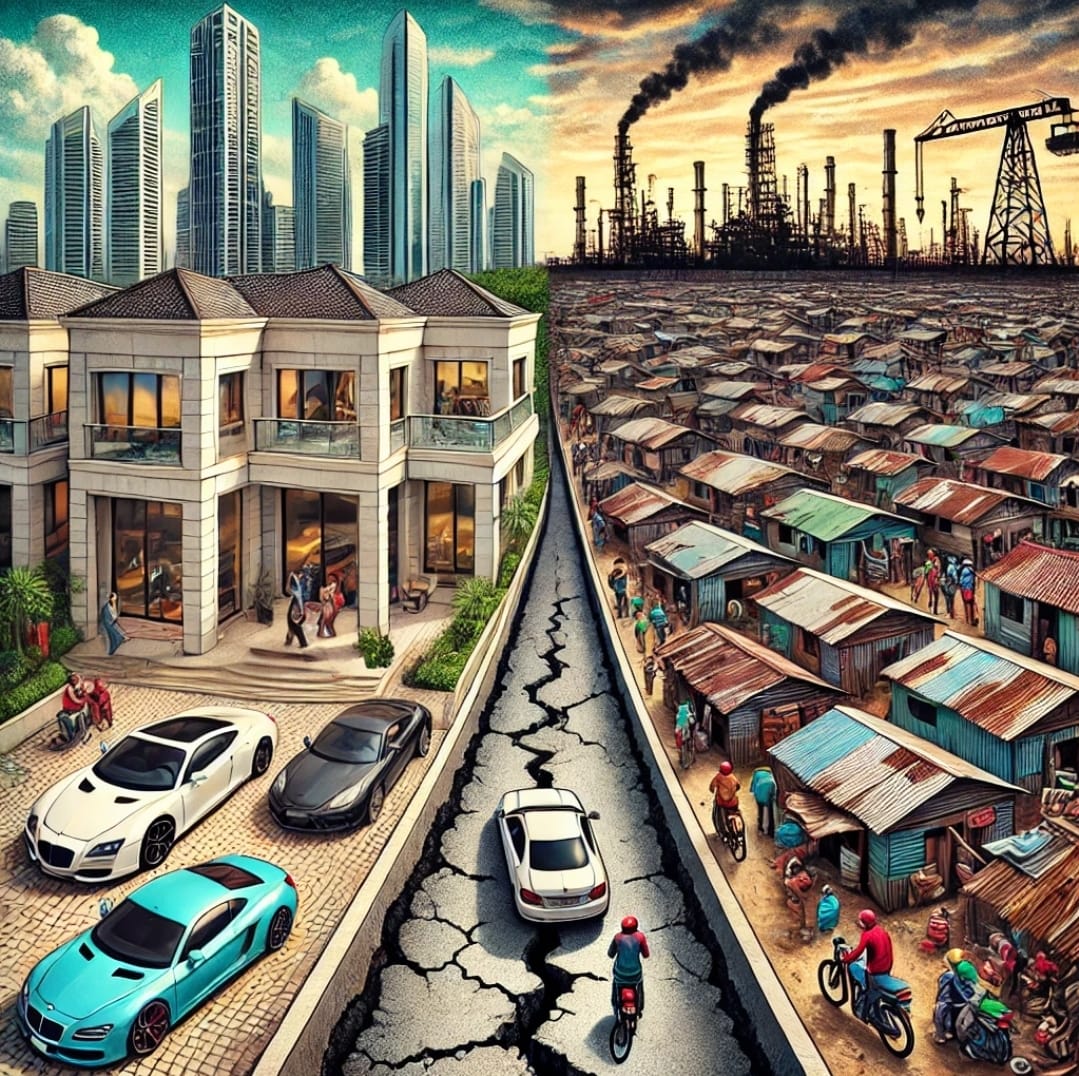
The narrative of inequality in Nigeria is a grim one. The country’s wealth gap is not only widening but has become a source of increasing concern for economic stability, social cohesion, and political tranquility. This chasm between the rich and the poor is more than a statistical disparity; it represents a dangerous trajectory that could have far-reaching consequences for Nigeria’s future.
The Wealth Gap in Numbers
Nigeria, Africa’s largest economy, is paradoxically also home to some of the highest levels of poverty on the continent. According to recent data from the National Bureau of Statistics, about 133 million Nigerians are currently living in multidimensional poverty. On the flip side, the wealth of Nigeria’s richest individuals has continued to grow, with Forbes listing several billionaires whose net worth collectively surpasses the national budgets of several states combined. This stark contrast underscores the depth of the disparity and the dangerous implications that accompany it.
The Root Causes of the Wealth Divide
Several factors have contributed to the growing inequality in Nigeria. Firstly, systemic corruption has crippled the nation’s potential for equitable growth. Resources meant for public services and infrastructure often get siphoned into private pockets, leaving the masses to struggle with inadequate healthcare, education, and living conditions.
Secondly, the structure of Nigeria’s economy, heavily reliant on oil, has disproportionately benefited a small elite while excluding large swathes of the population from wealth-generating opportunities. The lack of diversification in the economy means that those outside the oil sector often remain trapped in cycles of poverty.
Thirdly, inadequate investment in human capital has deepened the gap. Education, which should serve as an equalizer, has become a privilege, not a right. Poor access to quality education has left many Nigerians unequipped for better-paying jobs in an increasingly competitive and globalized job market.
Consequences of a Deepening Divide
1. Social Unrest and Insecurity:
A society where millions languish in poverty while a small elite accumulates unimaginable wealth is a fertile ground for unrest. The growing sense of disenfranchisement among Nigeria’s poor has led to increased crime rates, militancy, and banditry. Groups like Boko Haram have exploited the disillusionment of the impoverished, recruiting from areas where despair runs deep. This growing insecurity is not just a local problem but a national one, threatening the country’s stability.
2. Economic Stagnation:
A significant wealth gap hampers sustainable economic growth. When a vast portion of the population cannot afford basic necessities, there is little room for demand-driven growth. Moreover, the concentration of wealth in the hands of a few stifles entrepreneurship and innovation, which are essential for economic diversification and resilience. The rich may continue to invest in ventures that benefit them, but without widespread wealth distribution, Nigeria’s economy will remain lopsided and vulnerable to shocks.
3. Erosion of Democracy:
Economic inequality also weakens democratic institutions. When wealth determines access to power, politics becomes a game for the elite. The poor, who form the majority, feel increasingly excluded from the political process. This creates an environment where leaders are more accountable to wealthy patrons than to the electorate. It distorts governance, deepens corruption, and hinders meaningful policy changes aimed at reducing poverty.
4. Public Health Crisis:
Poverty has a direct correlation with poor health outcomes. In Nigeria, the divide in access to healthcare is stark. The wealthy have access to private hospitals and even medical tourism, while the poor are left to fend for themselves in underfunded public hospitals. This disparity exacerbates the health challenges in the country, from high maternal mortality rates to the resurgence of diseases like cholera. If left unchecked, the health of the nation could further deteriorate, impacting productivity and life expectancy.
Bridging the Gap: A Call to Action
To address this growing divide, Nigeria must take deliberate and strategic steps. Policy reforms are critical. Tackling corruption head-on should be a priority to ensure that public resources are directed towards the common good. Additionally, economic diversification is no longer optional but necessary. The country must invest in sectors like agriculture, technology, and manufacturing to create jobs and redistribute wealth.
Education must be prioritized to level the playing field. This includes not just primary and secondary education but also vocational training that equips young Nigerians with the skills needed in the modern economy. Healthcare reform is equally essential to ensure that no Nigerian is left behind, regardless of their economic status.
Lastly, there needs to be a concerted effort to strengthen democratic institutions and promote inclusive governance. A democracy that works for the people will ensure that policies are designed to reduce poverty and inequality, rather than perpetuate them.
Conclusion
Nigeria stands at a crossroads. The continuous widening gap between the rich and the poor is not just an economic issue; it is a threat to the nation’s stability, growth, and unity. It is imperative that both the government and the private sector recognize the dangers of this growing divide and work together to create a more equitable society. Only then can Nigeria hope to realize its full potential as a prosperous and peaceful nation.
—
Chris Mogbogu is a passionate advocate for social equity and economic reform in Nigeria. He believes in creating opportunities for all Nigerians to thrive and contribute to the nation’s growth.